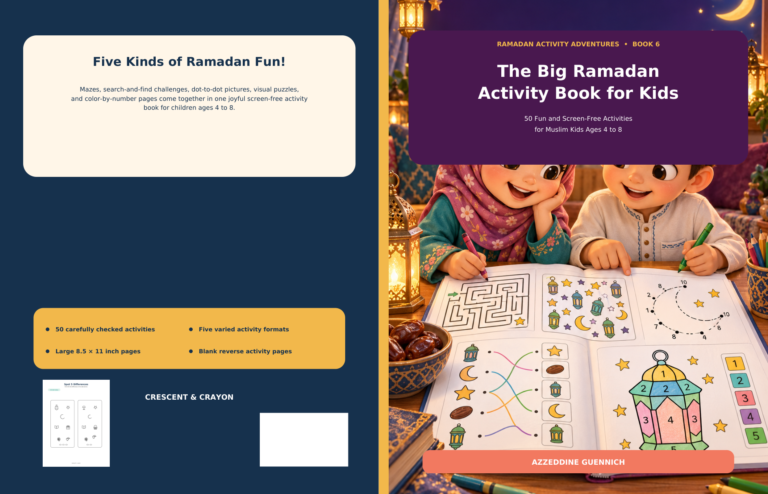
Ramadan can feel more meaningful to young children when the rhythm of the month includes calm, concrete activities they can understand and enjoy. Build a calm activity menu without complicated supplies. The goal is not to fill every minute. It is to give a child one clear invitation, enough time to try, and an easy stopping point.
Make the activity fit the child
Choose a small mix of creative, thinking and helping activities. Variety matters more than quantity: a child may want movement one day and a quiet page the next.
Related resource: The Big Ramadan Activity Book for Kids
A practical way to begin
- Activity basket. Prepare this before the child begins so the first instruction stays simple.
- Family kindness chain. Model it once, then give the child room to try in their own way.
- Lantern shape collage. Use clear, recognizable materials and check that the task says exactly what it means.
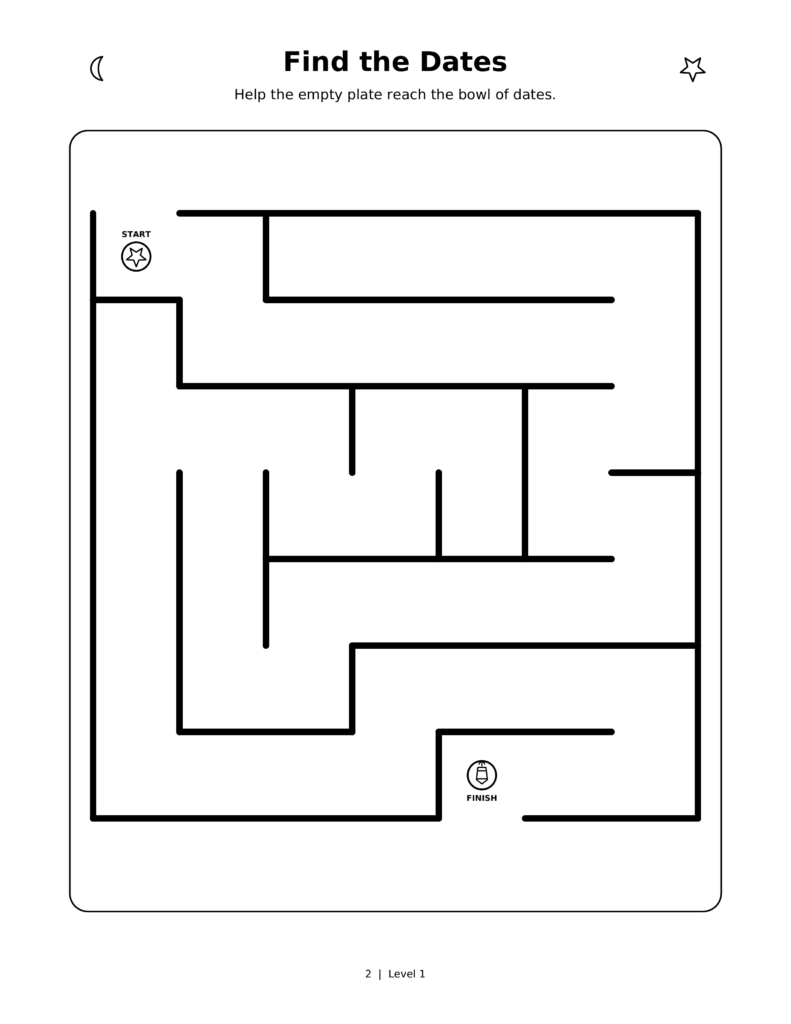
- Date-counting game. Adjust the number of choices or the time if attention begins to fade.
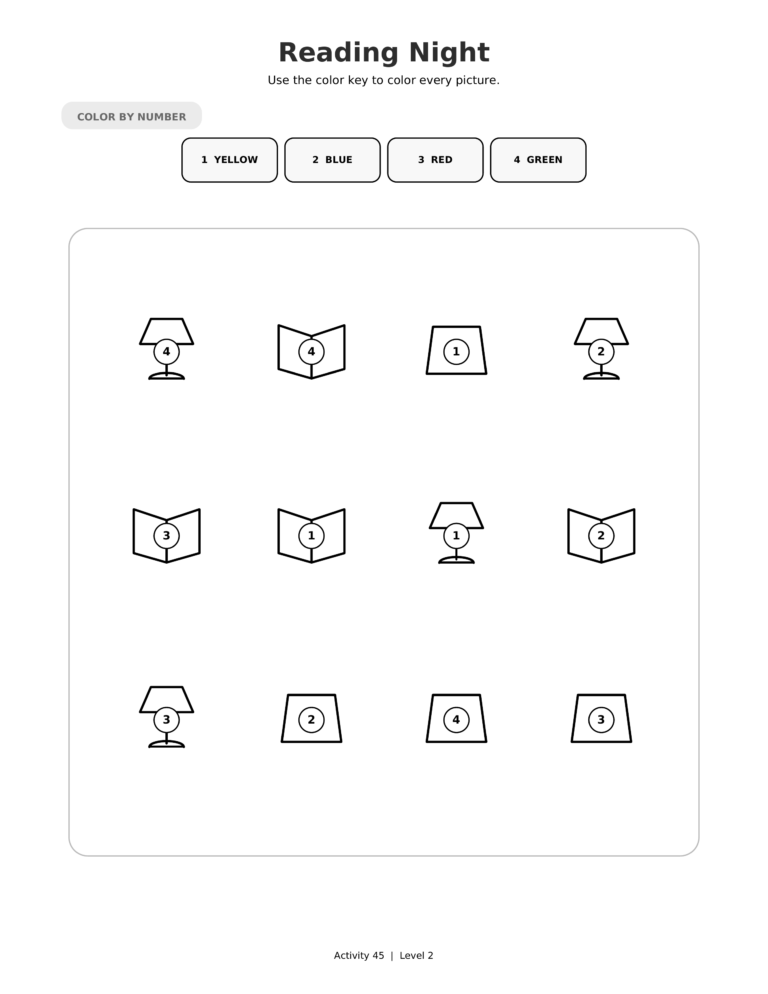
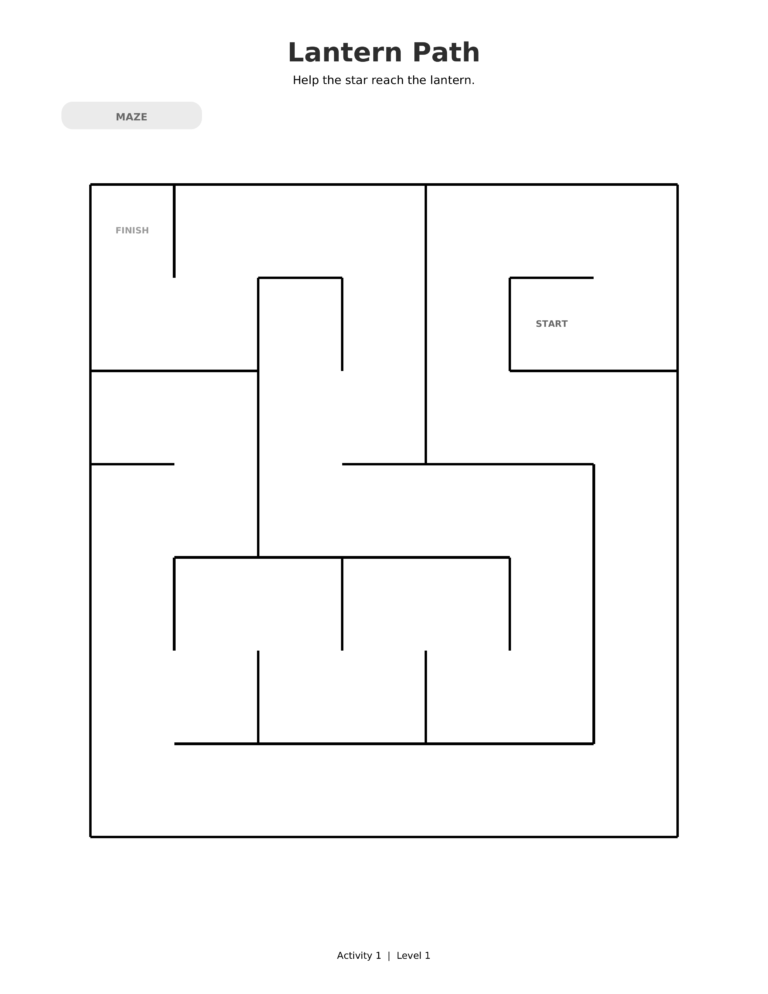
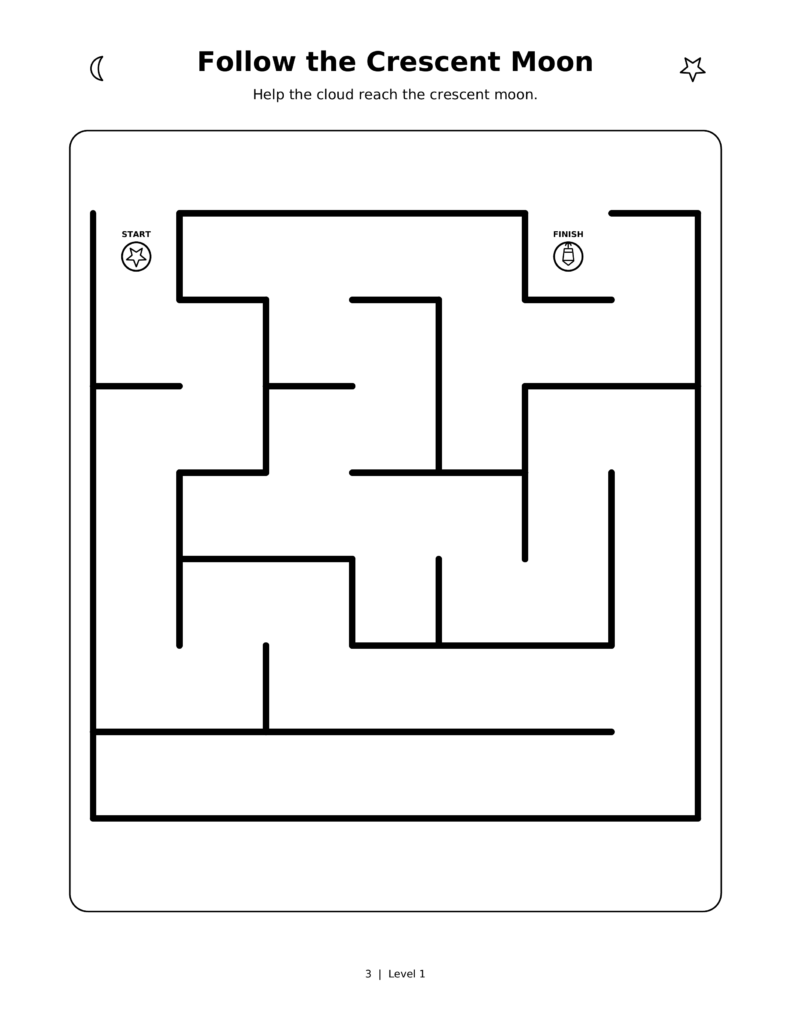
- Quiet puzzle time. Finish with a quick tidy or conversation so the activity has a clear ending.
Keep it accurate and comfortable
Keep religious explanations simple and accurate. Families differ in routines, and young children should never be pressured to fast. Ask a trusted knowledgeable reviewer to check specific religious teaching.
What to do next
Start with one idea and notice what the child can do independently. Repeat what works, simplify what does not, and keep the experience warm. Explore the Ramadan Activity Adventures series for screen-free puzzles and coloring activities designed for children ages 4 to 8.
FAQ
How long should the activity last?
For many children ages 4 to 8, ten to twenty focused minutes is enough. Stop earlier if the child is tired or frustrated, and continue later if they ask.
What if the activity is too difficult?
Reduce the number of choices, model one example or complete the first small step together. Support should make the next attempt clearer, not take the activity away from the child.