Eid preparations are easier for young children to enjoy when they have a simple role, a clear routine and an activity that matches their attention span. Reduce uncertainty with a visual plan. The goal is not to fill every minute. It is to give a child one clear invitation, enough time to try, and an easy stopping point.
Make the activity fit the child
A plan should reduce decisions, not create another demanding schedule. Start with the parts of the day that are already predictable and attach one short activity to them.
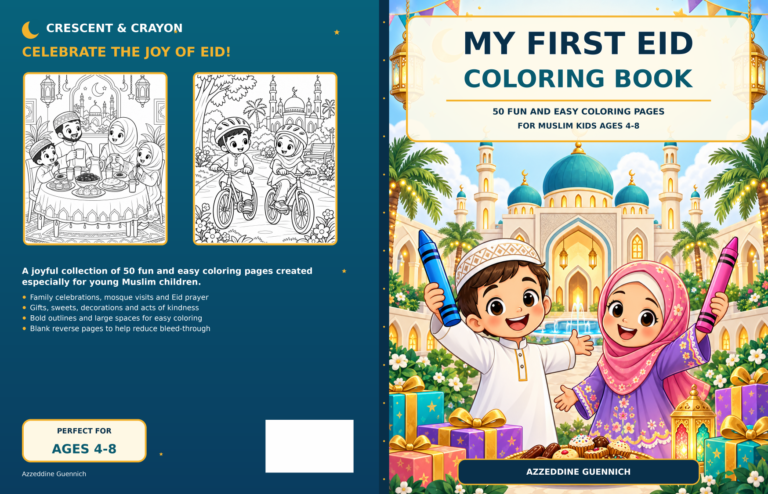
Related resource: My First Eid Coloring Book
A practical way to begin
- Show the order of events. Prepare this before the child begins so the first instruction stays simple.
- Include meal and rest. Model it once, then give the child room to try in their own way.
- Mark travel time. Use clear, recognizable materials and check that the task says exactly what it means.
- Name one child job. Adjust the number of choices or the time if attention begins to fade.
- Keep timing flexible. Finish with a quick tidy or conversation so the activity has a clear ending.
Keep it accurate and comfortable
Celebrations vary across families and cultures. Present activities as optional ideas, not as requirements for a correct Eid.
What to do next
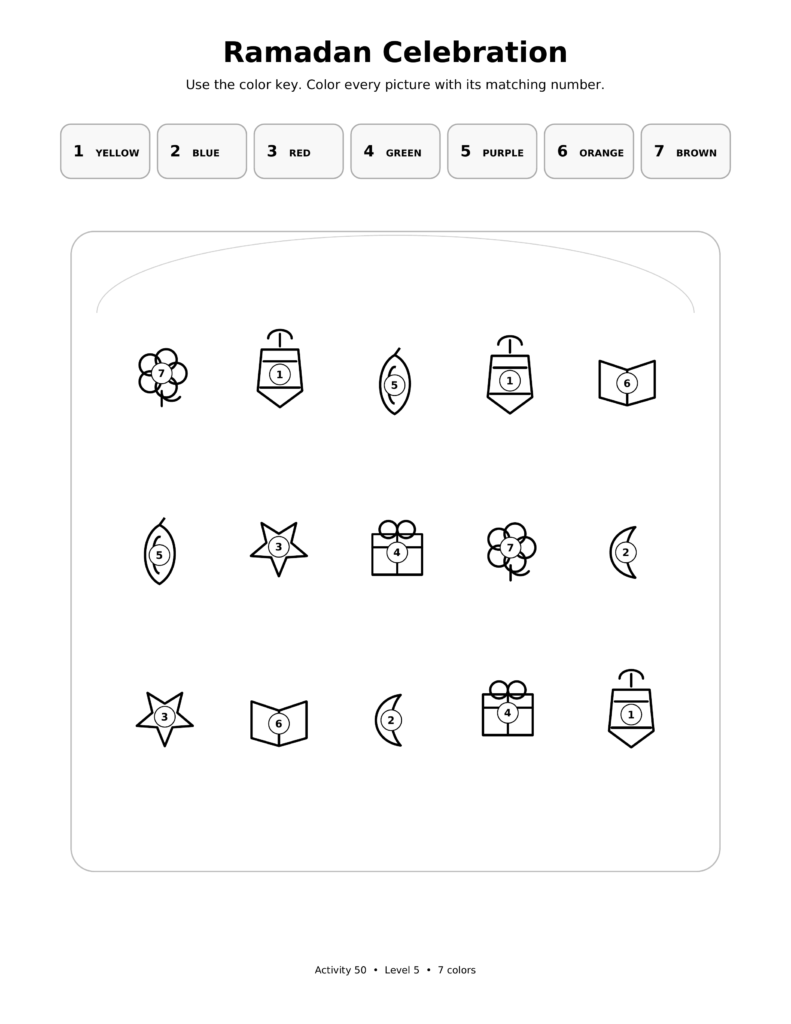
Start with one idea and notice what the child can do independently. Repeat what works, simplify what does not, and keep the experience warm. See My First Eid Coloring Book for a calm, child-friendly way to extend the celebration through coloring.
FAQ
How long should the activity last?
For many children ages 4 to 8, ten to twenty focused minutes is enough. Stop earlier if the child is tired or frustrated, and continue later if they ask.
What if the activity is too difficult?
Reduce the number of choices, model one example or complete the first small step together. Support should make the next attempt clearer, not take the activity away from the child.